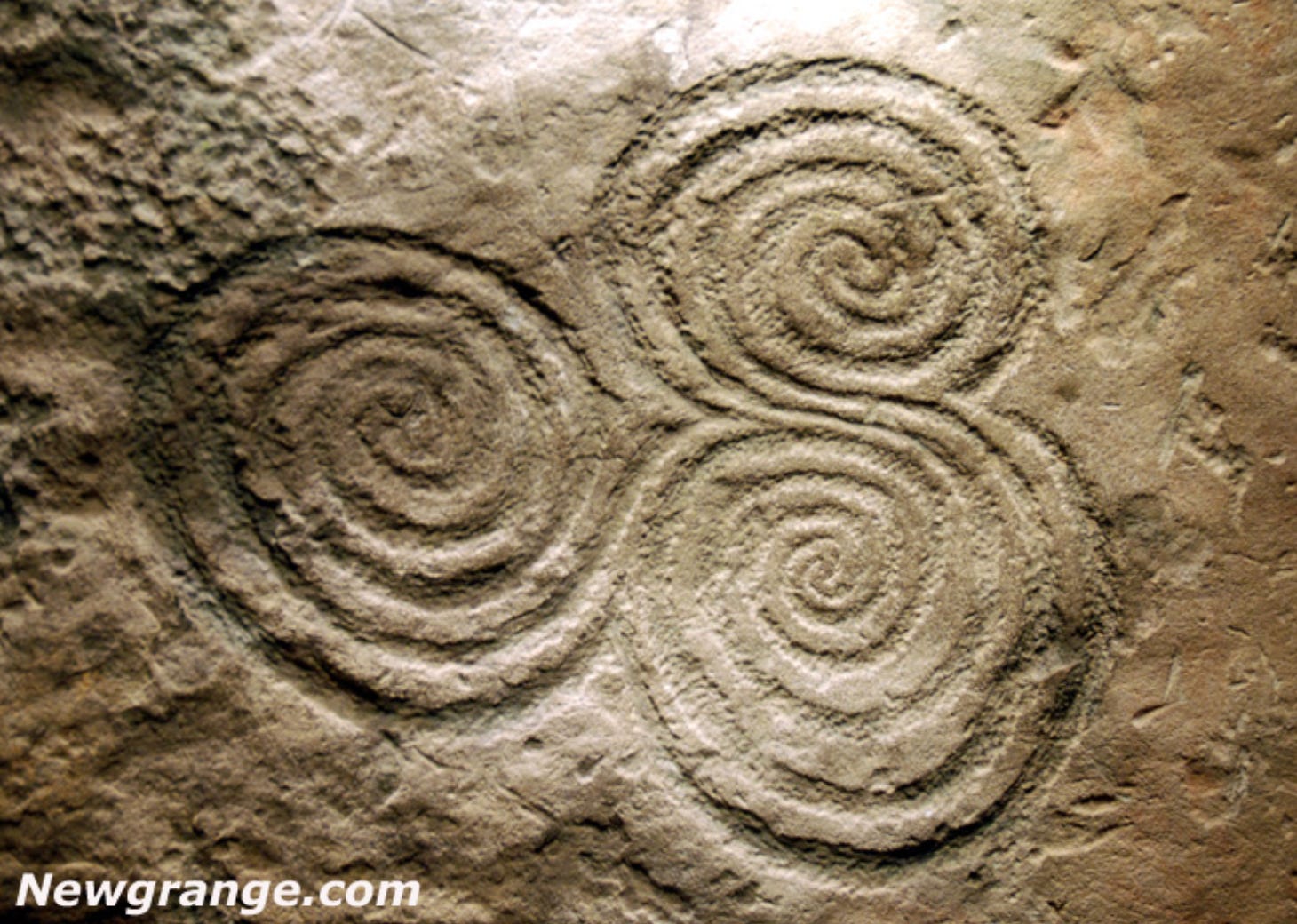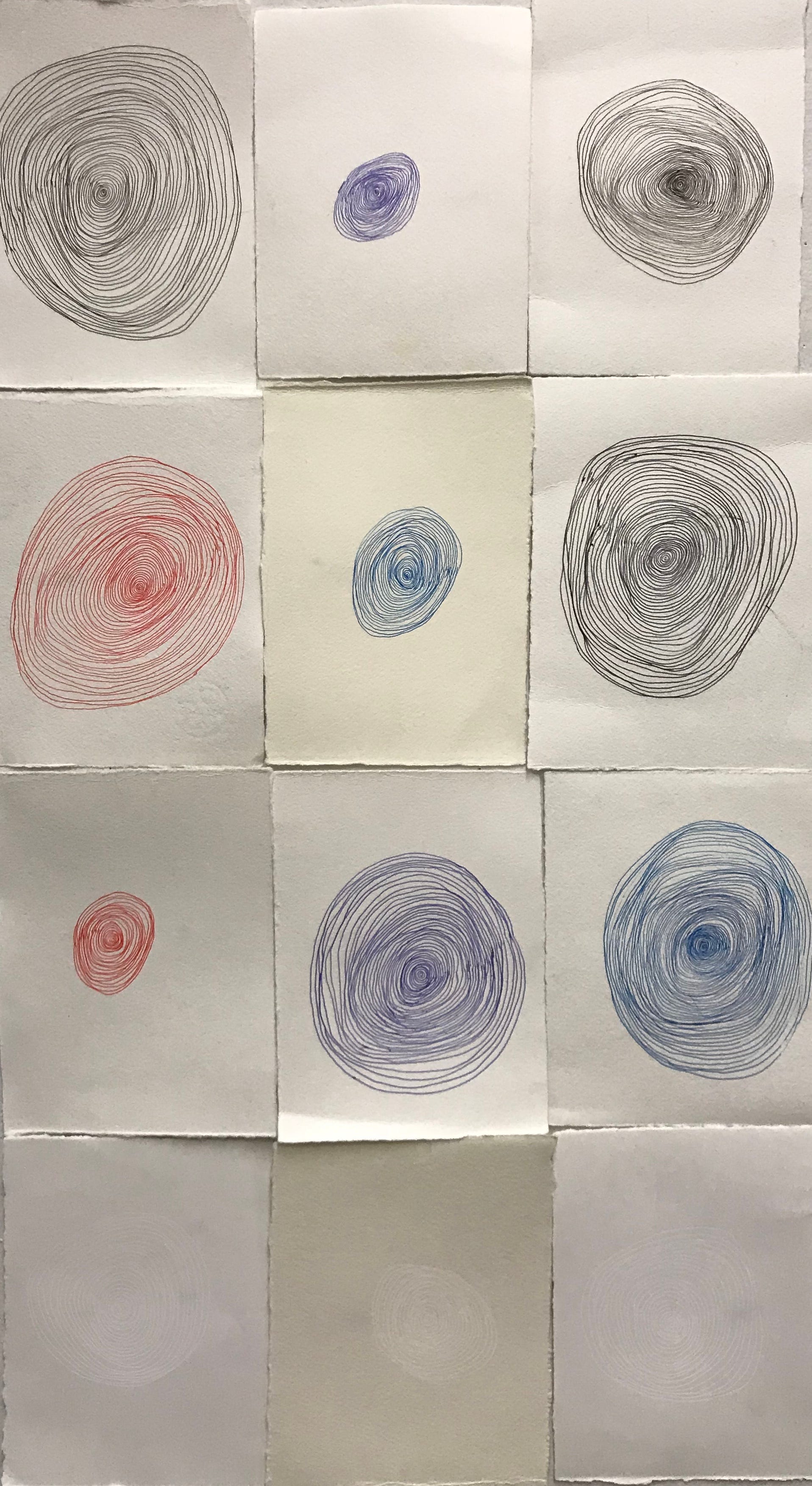
Symbols We Inherit
Why the same images keep appearing in our drawings, classrooms, and across centuries.

I frequently observe students exploring the same images, no matter the age or background. Eyes, hands, houses, animals, faces, spirals, hearts. In the studio, animals, plants, and spirals are particularly frequent.
When I started paying closer attention to these patterns, I realized there is a connection between the symbols my students naturally draw and images that appear in cave paintings, medieval manuscripts, Renaissance drawings, and contemporary art. These images emerge before students know what they’re “supposed” to draw. They seem to come from a place that is pre-verbal and deeply human. I’ve become particularly interested in the natural mark-making patterns that all people (whether or not they identify as artists) create.
When I was in high school, I had the opportunity to travel to Greece on a school field trip. I was seventeen, coming into my identity as a creative individual, and traveling abroad for the first time. One of my most vivid memories is being in Delphi and seeing engravings etched into stone preserved for centuries. As an aspiring art teacher, this stayed with me. I felt a connection between my own compulsion to make marks and the residual evidence of earlier humans. Something authentic in me connected with something ancient.
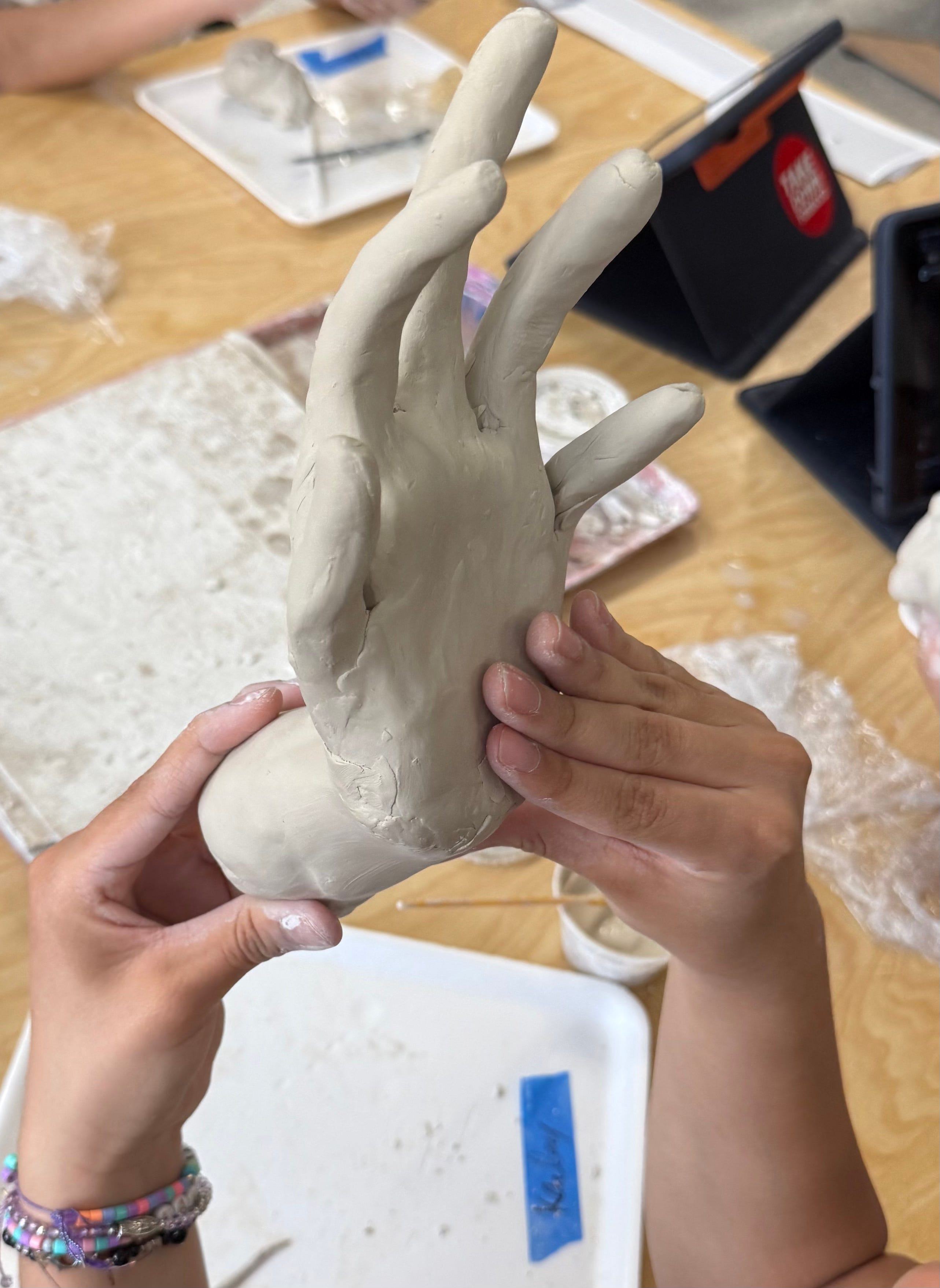
Hands are one of the oldest images humans ever made. Cave paintings in Lascaux and Chauvet include handprints. People would literally press their hands to the wall and blow pigment around them. It feels innately human to make a mark and preserve your presence in time. The hand is the catalyst between thinking and mark-making showing us how thoughts become visible.
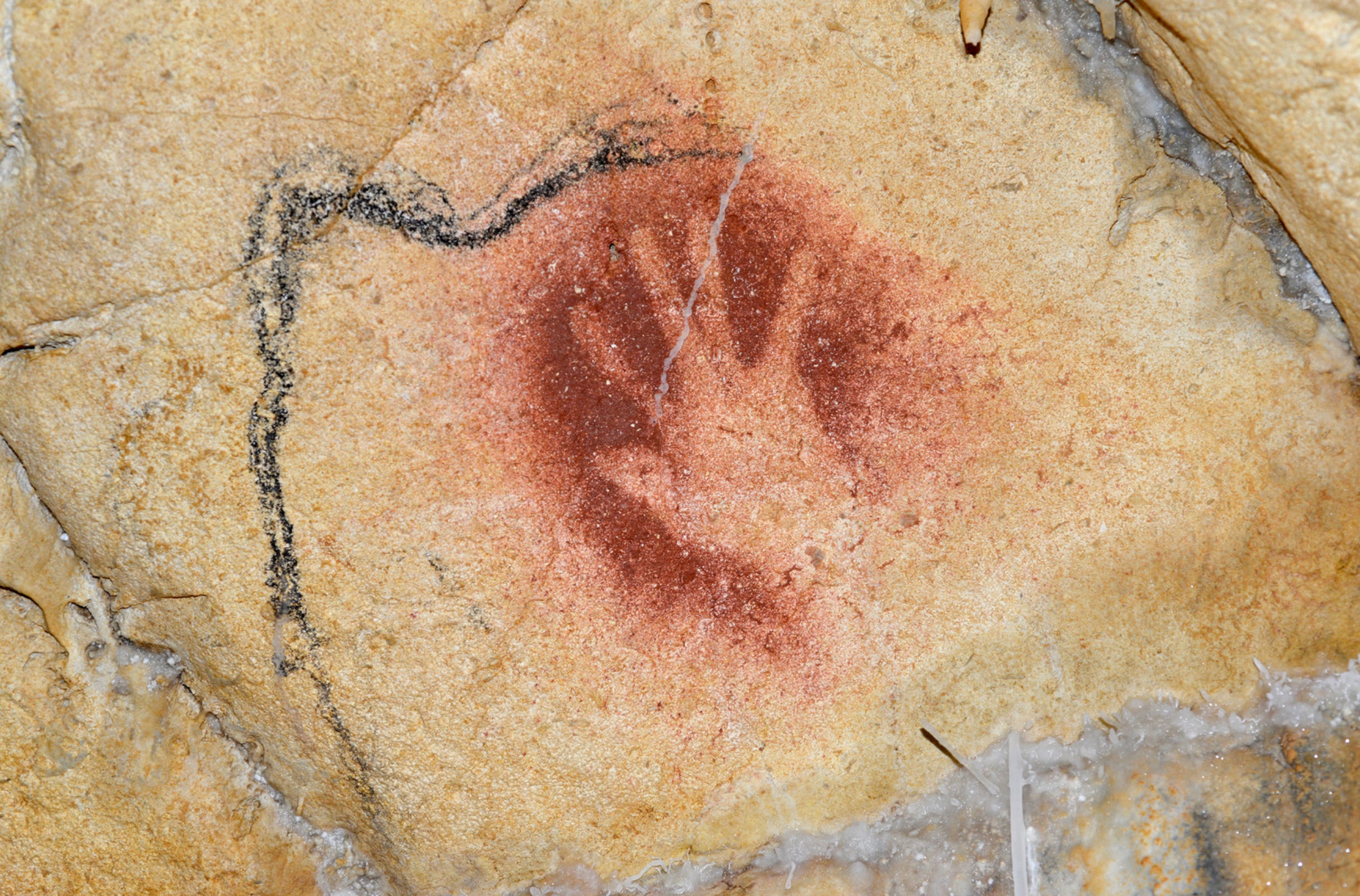
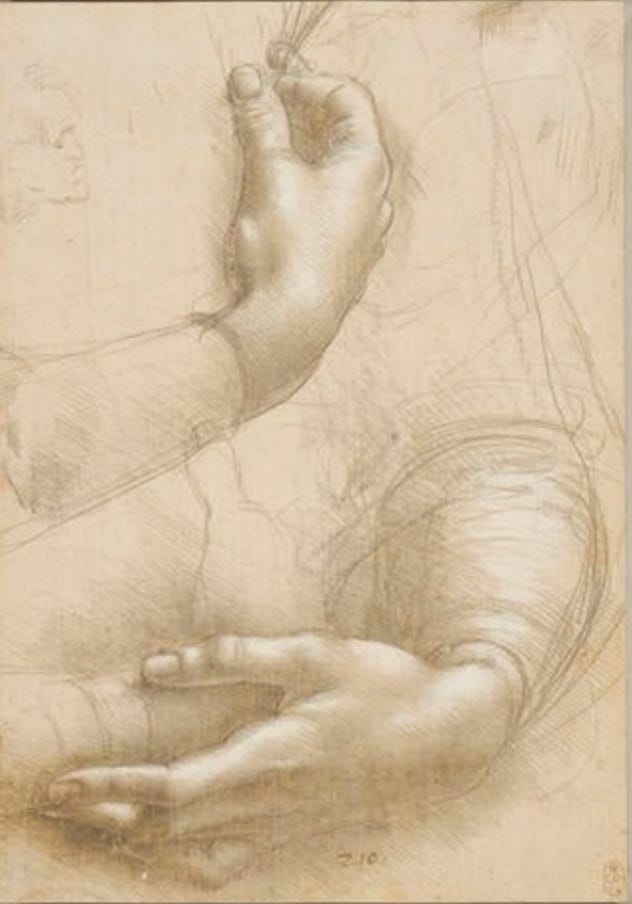
Hands have always been powerful tools of emotional expression. When I teach 7th and 8th grade, without fail, at least one student will request a lesson on drawing hands… or mention how terrible they are at drawing them.
How often do we look at our own hands throughout the day? Using our phones, typing, jotting something down. We’re deeply familiar with how they look and move- all 27 bones, multiple joints, complex layering of muscles and tendons. Perspective becomes difficult quickly, and foreshortening is almost always a challenge. Because of our deep visual relationship with our hands, our brains become harsh critics when we try to render them. And yet, something about drawings of hands, accurate or not, is always alluring.
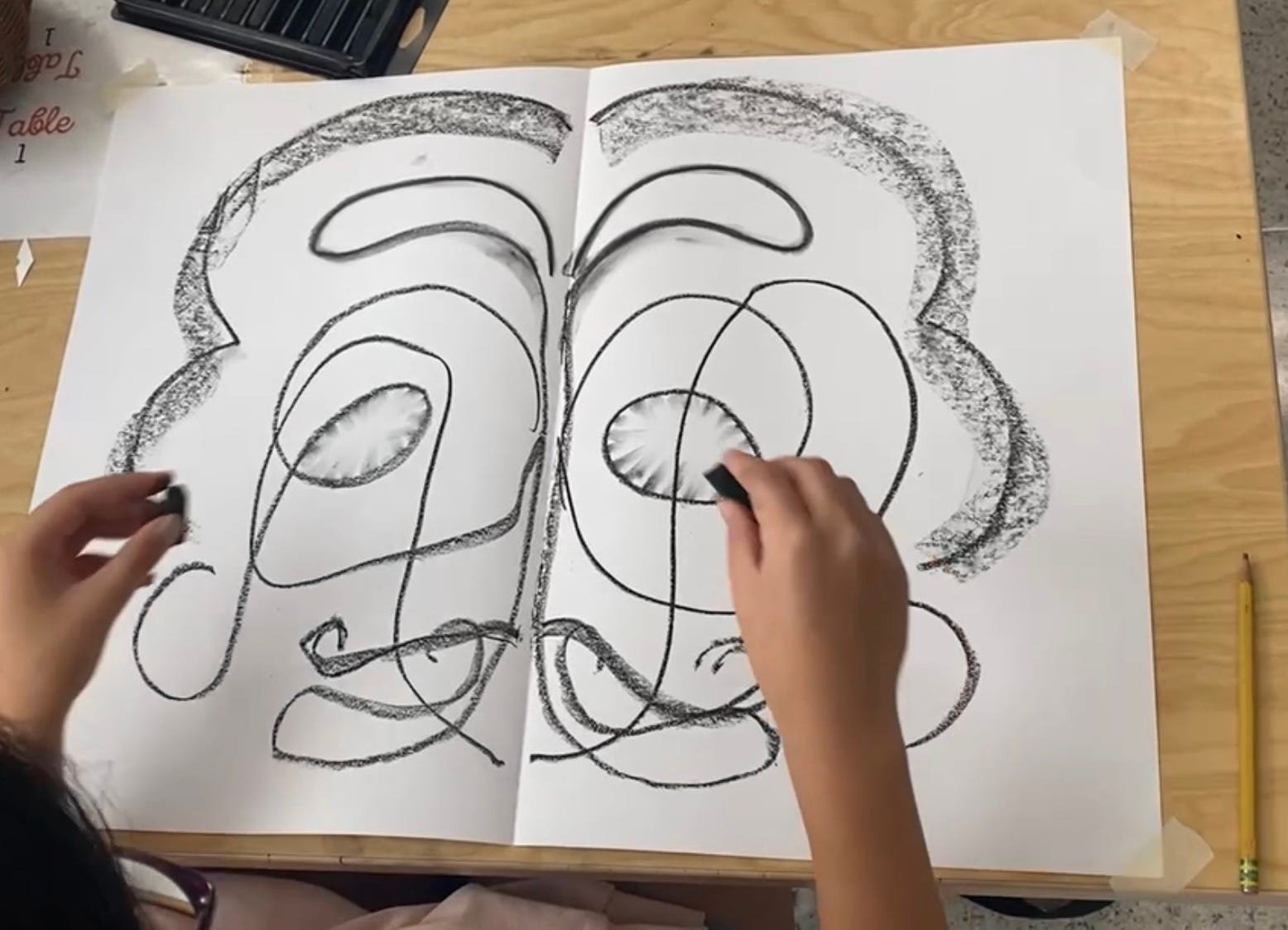
This reminds me that long before humans learned how to draw realistic space, they drew faces and eyes. Ancient Egyptian art, early icons, and medieval manuscripts show flat bodies with highly intentional faces. It’s as if we are programmed to document what draws us into human connection. We care about seeing and being seen before seeing accurately.
Spirals
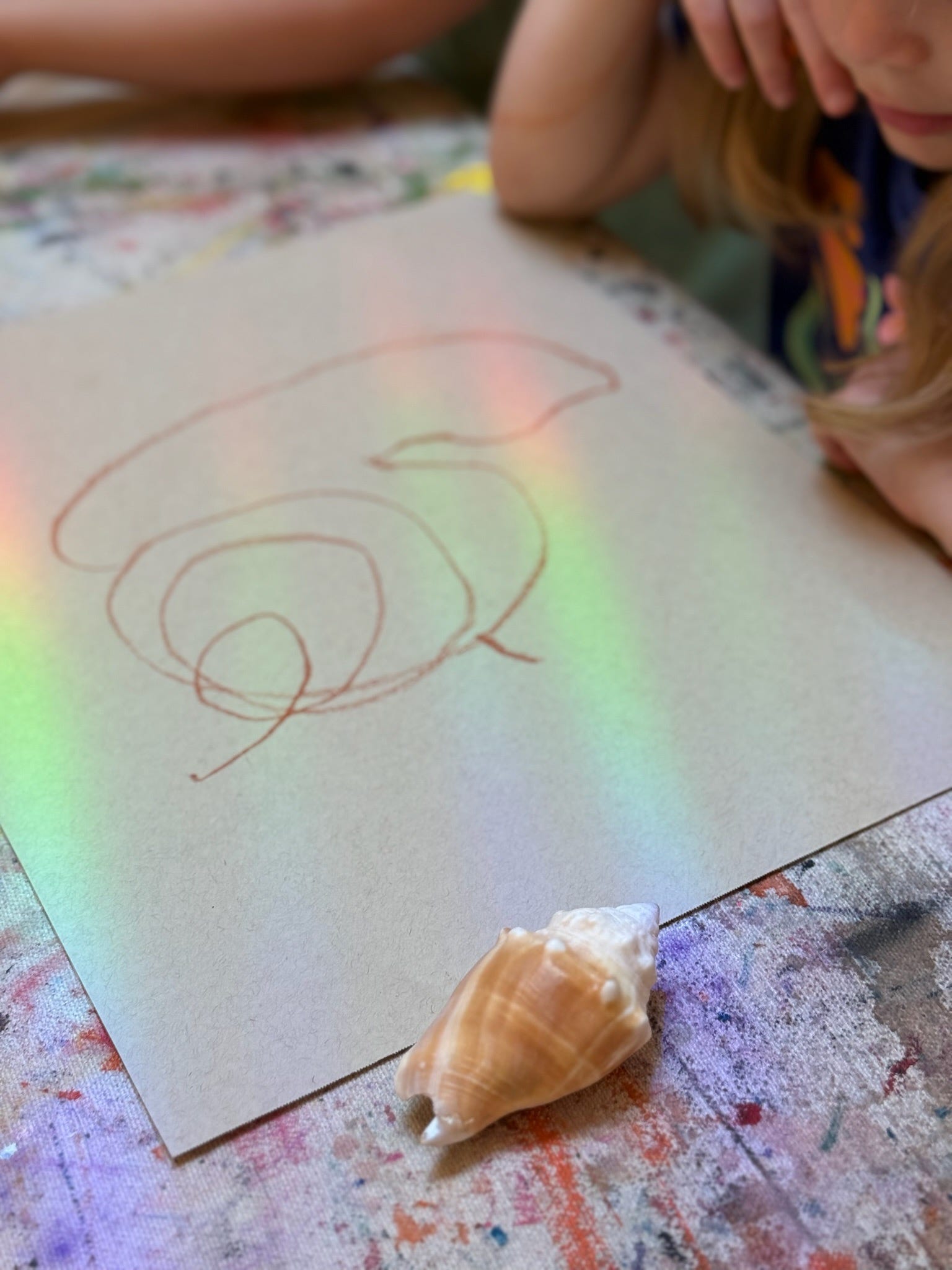
Spirals appear in some of the oldest known human markings. They show up in European Paleolithic sites, Neolithic carvings, and petroglyphs across Africa, the Americas, and Australia. Often without animals, without people, without scenes. Just the spiral.
Before anything narrative, humans made a line that turns around itself. Think about that. Before art as we know it and all of its assumptions, humans spiraled.
Most cave art is about survival and presence. But spirals are different. Spirals feel more like time, movement, repetition, attention. What it feels like to be alive inside a body.
At the studio, we give students time to play with new materials without focusing on the final outcome. The goal is simply to make marks and notice what the material can do.
I see spirals in my students’ sketchbooks and practice papers during these explorations. I remember seeing spirals when my mom would doodle absentmindedly on a notepad while talking on the phone. I see them in my old math notebooks from high school.
They appear when we’re thinking, waiting, nervous, lost. The hand starts to move in circles before we know what we want to say. This is thinking through motion.
The spiral might be the first time humans used a line to describe something happening inside themselves.
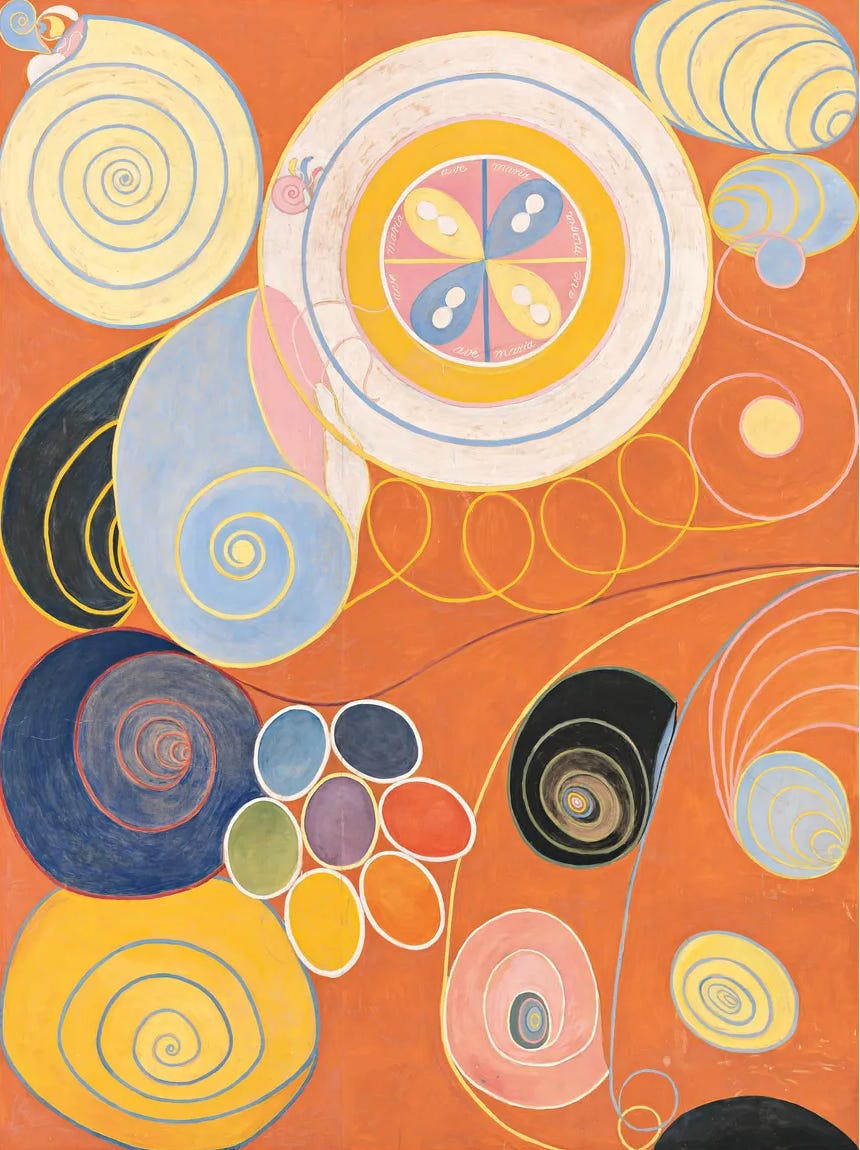
Hilma af Klint is often described as one of the first abstract artists, even before Kandinsky. She was deeply interested in spiritual systems and unseen forces. She used a personal visual language to understand what didn’t yet have words. In many ways, this is exactly what our students are doing. Hilma used spirals to describe invisible systems unfolding in her consciousness. Students use spirals to describe things they don’t yet have language for.
Spirals document what is becoming.
I’m beginning to learn more about cyclical and spiral ways of knowing, particularly in Indiginous knowledge systems. I have a feeling that this will influence my ideas as I continue thinking about education, art, and visual patterns.
The next time you sit down to draw, try not to wonder what you should make. Notice what your hand creates when you’re not thinking.
Over time, notice what shapes repeat themselves across your sketchbooks or scraps of paper. What images appear again and again, even when the subject changes?
You don’t have to invent a new visual language to make meaningful work. The meaning and come after the making. Let patterns emerge and pay attention to your habits. Let repetition be information.
Drawing is ancestral. You’re not starting from nothing.
Notice what returns.
Do spirals show up in your art? Your students’ or your child’s?
What recurring shapes do you see in your sketchbooks? We’d be curious to know and see if any other patterns emerge…